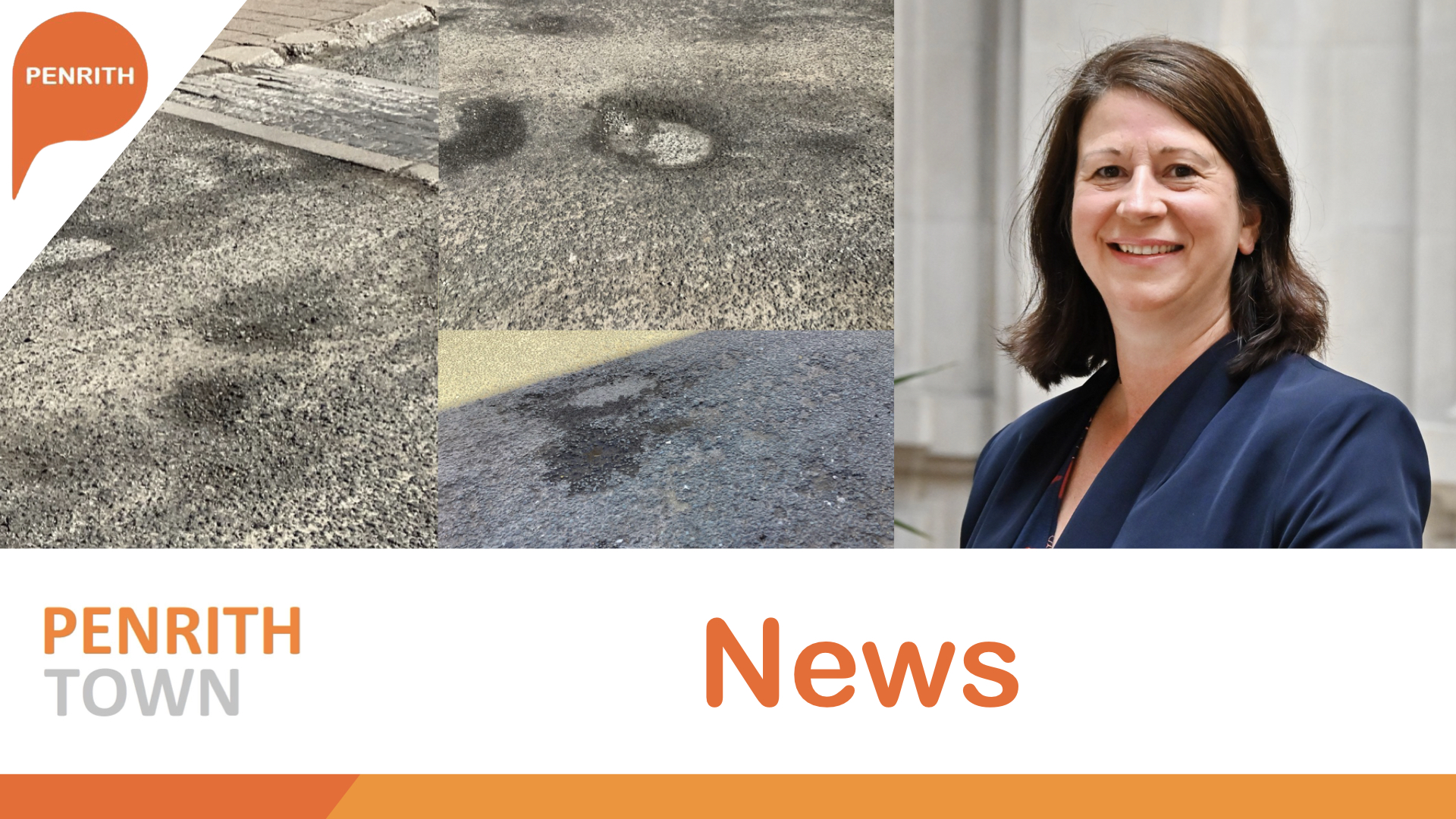
Westmorland and Furness Council is challenging a new government scoring system that ranked Westmorland and Furness Council as one of worst across England at tackling potholes along with Neighbouring Cumberland Council on a new mapping system that allows drivers across England to see how well their local highway authority (LHA) is tackling potholes is been challenged with a request for clarity on the way government have calculated the ranking of local authorities.
The interactive map shows every LHA’s rating, to highlight best practice and drive improved performance from councils, with Westmorland and Furness Council ranked Red one of only a handful of Council ranked as red under the new system.
President of The Association of Directors of Environment, Economy, Planning & Transport Angela Jones, who is also director of thriving places with Westmorland and Furness Council said: “We acknowledge the government's commitment to transparency and long-term investment in local roads, however the newly published ratings raise significant questions about the assessment methodology.
“We would like clarity on how ratings have been calculated, including how different data collection approaches and funding allocation timings have been factored into assessments. We need to ensure the ratings fairly reflect genuine progress across different local authority areas - in the future, we believe local authorities should have the opportunity to verify data and clarify any factual questions before ratings are published, to ensure accuracy and build confidence in the system.
“While the £7.3 billion investment announced in the budget last year represents a step forward, it follows decades of underfunding that left local roads in a fragile state - it is just the start of what is needed to tackle the £17bn repair backlog that continues to grow. Road condition isn't simply a measure of council performance - it reflects historic funding levels, traffic volumes, network size and weather impacts.
“For many years, councils have been calling for multi-year funding certainty, so they can plan effectively and prioritise long term, preventative maintenance over costly reactive repairs.
“Together, the funding announcements made last year represent a step in the right direction, meaning that we can invest more in the treatments that stop potholes forming in the first place. However, after decades of underinvestment, it will take time before we see the rate of deterioration slow and meaningful improvements in network condition.
“We welcome the extension of the ADEPT Live Labs 2 programme for another year – Year 4 will focus on sharing best practice, ensuring that the insights and innovations developed through the programme are communicated across the sector to accelerate the adoption of new solutions to establish new ways of working. This kind of practical support, alongside funding, is exactly what is needed to transform how we maintain our roads. The UK-wide £30 million programme, funded by the Department for Transport, aims to decarbonise the local highways infrastructure network.
“With sustained investment and the right support, councils can focus on improving road conditions while managing the ongoing challenges of heavier vehicles, severe weather and third-party works that all impact our roads.”
As one of the governments red rated authorities, Westmorland and Furness Council is set to receive support from central government to help the council make improvements along with planning and capability assistance include peer reviews where sector experts will help improve processes and provide practical advice.
The new government traffic light rating system has revived support from other national organisations including the RAC, Simon Williams Head of Policy at RAC, said:
These new ratings are a positive move that will help drivers understand how councils are performing when it comes to improving the state of local roads. While there are examples of good road maintenance practice taking place, this isn’t consistent across the country and means drivers have, for too long, been left with substandard roads.
We hope this initiative, plus the promise of longer-term funding for councils to allow them to plan and carry out much-needed preventative maintenance, means we’re finally on the way to having smoother, better roads.
Kerry Winstanley, Managing Director of Local Council Roads Innovation Group (LCRIG), said:
The release of the national ratings provides a clear opportunity to target support and strengthen the local road network where it is most needed.
For many years, highways authorities have worked hard to maintain roads despite declining budgets and resources and the ratings, released alongside record multi-year investment, will enable authorities to benefit from additional support and increase investment in preventative maintenance, while continuing collaborative work supported by LCRIG, including sharing best practices, adopting innovative solutions, and working towards a nationally green-rated road network.
Councillor Peter Thornton, Cabinet Member for Highways and ICT at Westmorland and Furness Council, said: "We are always looking to improve the condition of our highway but do not understand why Amber ratings in the three categories are then translated into an overall Red rating. The assessment methodology has also caused some confusion among many authorities, and we are seeking clarity on that. We were assured that only sending data for the last two years, since Westmorland and Furness Council came into being, was acceptable but we seem to have been penalised for not sending five years' worth of data.
"Our network has scale, rurality, and historic assets which make maintenance uniquely challenging, but we are determined to meet these challenges head-on and build on the progress already achieved."
Westmorland and Furness Council manages one of England's largest and most rural highway networks, spanning over 2,600 miles of roads – significantly more than the average throughout England and Wales – supported by more than 2,000 bridges, 72,000 drainage gullies, and 20,000 streetlights. This network includes unique assets such as remote mountain passes and historic bridges, which present significant maintenance challenges.
The council says they have made improvements such as:
Over 33,000 potholes repaired in the previous year, with innovative techniques such as jet patching and thermal patching;
Improved road condition scores based on accredited survey data;
Increased investment, with £8.4 million allocated for pothole repairs and multi-million-pound resurfacing programmes on key routes.
View the new interactive map on the Department for transport local road maintenance ratings map site.


 Then select "Add to Home Screen"