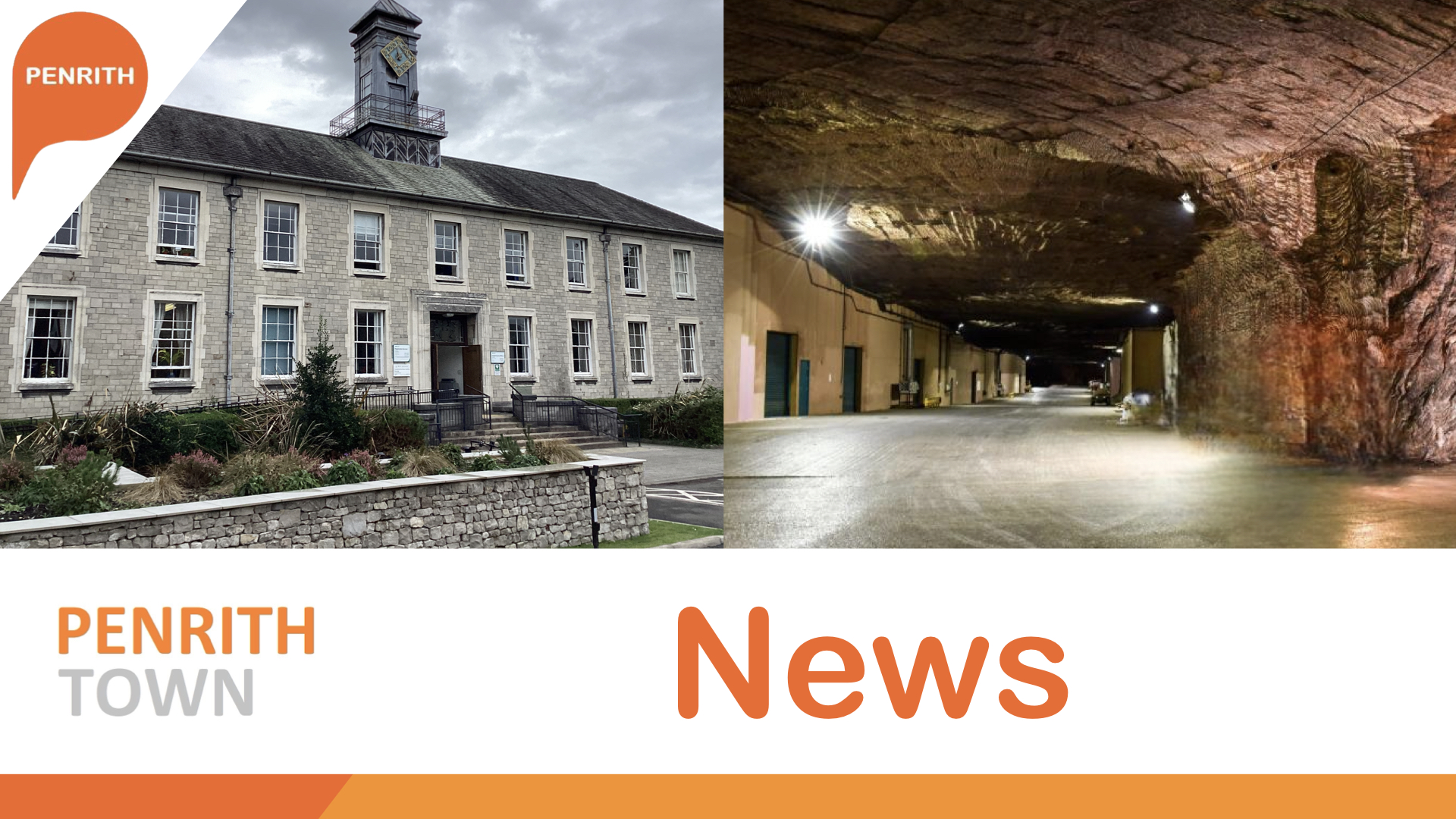
Historical artefacts and archives from across Cumbria — including some items dug up from the ground locally — are set to be placed back beneath the earth as part of a temporary relocation of some of the archive currently stored in County Hall in Kendal to a specialist underground storage facility.
Cumbria Archives, a countywide service jointly funded by Cumberland Council and Westmorland & Furness Council, cares for a wide-ranging collection of the region’s heritage. This includes documents, photographs, and items such as paintings from Penrith Town Hall, along with records deposited by town and parish councils across the county.
The move follows the announcement in July 2024 by Westmorland and Furness Council that County Hall in Kendal would close to the public, subject to a future review.
While the archive collections have remained at County Hall, along with the Cumbria Archives team, council leaders are now preparing to consider a report in April that will see the building permanently closed, declared surplus for service provision, and disposed of in line with council policy.
Cumbria Archives has stated that the protection of collections remains its priority. Kendal County Hall is no longer considered suitable for archive storage, as it is increasingly difficult to maintain the strict environmental conditions required to preserve historical materials. As a result, the collections currently held in Kendal must be relocated in the short term.
In the absence of a suitable local alternative, Westmorland & Furness Council and Cumberland Council intend to move the archives out of Cumbria to DeepStore Records Management in Winsford, Cheshire.
The facility is located approximately 150 metres below ground within one of the UK’s oldest and largest working rock salt mines. Spanning an area comparable to around 700 football pitches, the vast underground site provides a naturally stable environment, with consistent temperature and low humidity — conditions considered ideal for the long-term preservation of delicate archives and historical artefacts.
DeepStore’s subterranean storage is already used by The National Archives and several other local authority archive services, specifically for safeguarding important records and heritage collections over extended periods.
The councils expect to use the salt mine facility for around two years. During this time, they will consult with stakeholders — including depositors, The National Archives, archive users, local heritage groups, partners, and the wider community — to identify a long-term solution for the storage and accessibility of Cumbria’s archives.
Organisations or individuals wishing to deposit records during this period are advised to contact the archives service directly for guidance.
The move will see Cumbria’s history stored deep underground in a unique environment designed for preservation, while decisions are made about its future home.


 Then select "Add to Home Screen"